IRS Delays the $600 Reporting Rule for Third-Party Payment Platforms: What Businesses, Freelancers, and Individuals Need to Know
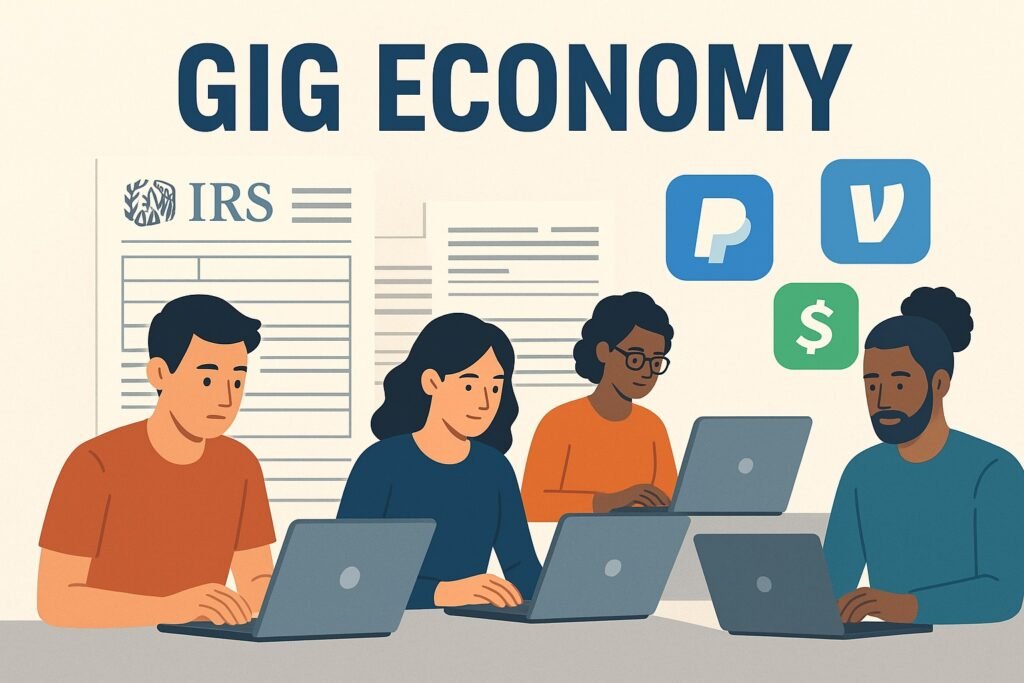
The IRS has once again delayed the enforcement of the controversial $600 reporting rule for third-party payment platforms like PayPal, Venmo, and Cash App. Originally scheduled to take effect for 2023 filings, the rule will now begin with 2025 filings for 2024 income.
Understanding the latest IRS rules is crucial for individuals, freelancers, and small business owners. One of the most talked-about updates in recent years has been the IRS $600 reporting rule. While taxpayers were preparing for big changes, the IRS has once again delayed full implementation. This has left many people confused about whether they’ll receive new 1099 forms, what thresholds apply, and how income should be reported.
In this guide, we’ll break down everything you need to know about the IRS $600 tax rule in 2025, how it impacts businesses, individuals, and third-party payment platforms like PayPal, Venmo, CashApp, and Zelle, and how Liberty Tax Accounting can help you stay compliant without unnecessary stress.
Understanding the IRS $600 Reporting Rule
The “$600 tax rule” refers to an IRS reporting requirement tied to Form 1099. It does not introduce a new tax—it simply lowers the threshold at which third parties must report payments to the IRS.
Here’s the breakdown:
1. For Businesses Paying Contractors or Freelancers
- If a business pays an independent contractor, freelancer, or service provider $600 or more in a calendar year, it must issue a Form 1099-NEC (Nonemployee Compensation).
- The contractor must report this income on their tax return.
- This rule applies to services only, not goods.
👉 Example: A small business hires a web designer and pays them $1,200 in 2024. The business must issue a 1099-NEC, and the designer must report the income.
At Liberty Tax Accounting, we regularly help businesses file 1099-NECs correctly and ensure contractors properly report this income on Schedule C of Form 1040.
2. For Third-Party Payment Platforms
This is where most of the confusion lies.
- Before 2022: Third-party platforms (PayPal, Venmo, CashApp, etc.) were only required to issue Form 1099-K if payments exceeded $20,000 AND more than 200 transactions.
- New rule (delayed until 2025): The threshold drops to $600 total payments (regardless of the number of transactions).
- What’s covered? Payments for goods and services.
- What’s excluded? Personal transfers—like splitting rent with a roommate, paying back a friend for dinner, or sending money to family.
Platform specifics:
- PayPal, Venmo, CashApp → Must issue 1099-K if thresholds are met.
- Zelle → Exempt from 1099-K reporting, as it functions more like a direct bank transfer.
👉 Example: If you sell handmade jewelry online and receive $700 in payments through PayPal in 2024, PayPal must issue a 1099-K for tax year 2024 (reported in 2025).
Important: Even if you don’t receive a 1099-K, you are still responsible for reporting all taxable income.
Need help tracking multiple income streams across apps? Liberty Tax Accounting can integrate your records and prepare accurate returns.
3. For Individuals and Taxpayers
One of the most common misconceptions is that income under $600 is tax-free. That is not true.
- Taxpayers are legally required to report all taxable income, whether or not a 1099 form is issued.
- The $600 rule is a reporting threshold for businesses and payment platforms—not an exemption.
👉 Example: You earn $450 doing freelance photography. Even without a 1099, you must still report this income on your tax return.
Key reminder from Liberty Tax Accounting: Whether or not you receive a form, you’re responsible for reporting all taxable income.
Why Did the IRS Delay the Rule?
The IRS cited the need for a “phased-in approach” to avoid confusion and reduce the risk of errors. Millions of taxpayers could have received unexpected 1099-K forms for 2023, even for payments that weren’t taxable (such as reimbursements or personal transfers mislabeled as business payments).
By delaying implementation, the IRS gives taxpayers and platforms more time to adapt.
Form 1099-K vs. Form 1099-NEC
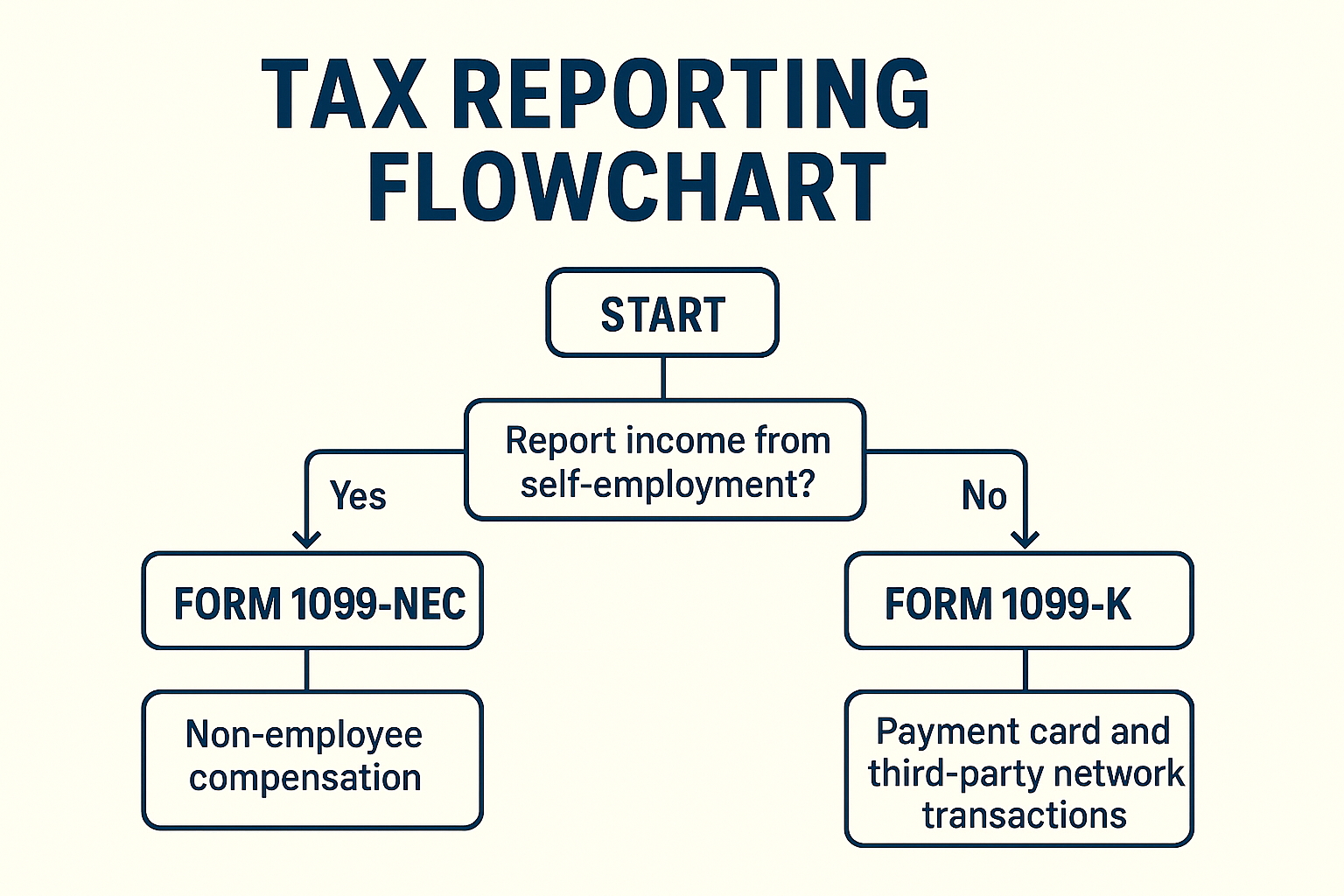
It’s easy to confuse these two forms:
- Form 1099-K → Used for third-party network payments (PayPal, Venmo, CashApp).
- Form 1099-NEC → Used for nonemployee compensation (freelancers, contractors).
Thresholds:
- 1099-K (2025): $20,000 AND 200+ transactions.
- 1099-NEC: $600 minimum, no transaction count.
📌 Some states (like Massachusetts and Virginia) enforce their own lower thresholds, so check your state requirements or consult Liberty Tax Accounting for state-specific guidance.
Impact on Gig Economy Workers & Small Businesses
Gig economy workers—like rideshare drivers, delivery drivers, online sellers, and freelancers—are directly affected by these reporting changes.
- The rollback means less paperwork in 2025.
- However, the tax obligation remains the same—all income must be reported.
- Small businesses still need to issue 1099-NECs when paying contractors.
At Liberty Tax Accounting, we work with gig workers and small businesses to:
- Track multiple income sources.
- Organize tax documents.
- Ensure compliance with both federal and state rules.
Tips for Accurate Income Reporting in 2025
Even though the $600 rule is delayed, accurate income reporting is critical.
Best practices from Liberty Tax Accounting:
- Keep detailed records of invoices, receipts, and transactions.
- Use bookkeeping software to track payments across apps.
- Reconcile bank statements
- Consult with a tax professional before filing.
Accurate reporting not only avoids IRS audits but also ensures you don’t miss out on deductions and credits.
How Liberty Tax Accounting Helps You Stay Compliant
Tax laws are always evolving, and staying compliant can be overwhelming. That’s where Liberty Tax Accounting comes in.
We provide:
- Tax preparation for individuals, freelancers, and small businesses.
- 1099-NEC and 1099-K guidance for both payers and recipients.
- Gig economy support tailored for rideshare drivers, online sellers, and contractors.
- Audit protection and compliance reviews.
👉 Ready to simplify your taxes? Visit our homepage or contact us today to schedule a consultation.
Conclusion
The IRS $600 reporting rule has caused confusion for years, but for tax year 2025, it will not take effect. Instead, the old $20,000 + 200 transactions threshold remains for 1099-K reporting. Businesses must still issue 1099-NECs for payments of $600 or more to contractors.
The bottom line: all taxable income must be reported, regardless of whether you get a 1099 form.
Don’t navigate these changes alone—trust Liberty Tax Accounting to help you stay informed, compliant, and stress-free.
👉 Visit our homepage or contact page to get professional tax help today.
Frequently Asked Questions About the $600 IRS Rule
Q1: Does the IRS $600 rule mean I don’t have to report income under $600?
No. The $600 rule is only about reporting thresholds. All income must be reported, no matter the amount.
Q2: Will I get a 1099-K for selling personal items on eBay or Facebook Marketplace?
If you sold them at a loss (less than what you originally paid), those are not taxable. But if you sell items as a business or for profit, the income must be reported.
Q3: Do payment apps report personal transactions to the IRS?
No. Transactions like splitting a dinner bill or sending money to family are not taxable and not reported.
Q4: What happens if I don’t report income not shown on a 1099 form?
The IRS requires you to report all taxable income. Failure to do so could result in penalties, interest, or audits.